
2026 Best Food Sealing Machine for Global Buyers?

Choosing the 2026 best Food Sealing Machine is not about chasing the fastest cycle time. Global buyers need a machine that fits their product, package material, output target, and available maintenance support. A tabletop sealer may suit a small batch of pouches; a continuous band sealer can better serve steady production. The right choice should be tested with the actual film and filled package, not judged from a brochure alone.

Food-packaging specialist Dr. Gordon L. Robertson offers a useful principle: “A package must protect the food and perform reliably through its intended journey.” Buyers should apply that thinking to seal strength, temperature control, production speed, and ease of cleaning. Ask suppliers for sample runs, clear operating specifications, and details about spare parts and technical support in your region. Watch how the seal looks after handling. Small wrinkles can matter.

There is no universal winner. A machine that works well for dry snacks may not suit sauces or oily products. That detail is easy to overlook. This guide compares machine types, key features, and practical buying checks for international purchasers. It also flags trade-offs, because a lower purchase price can bring higher operating demands. Use the recommendations as a starting point, then validate performance with your own product and packaging.
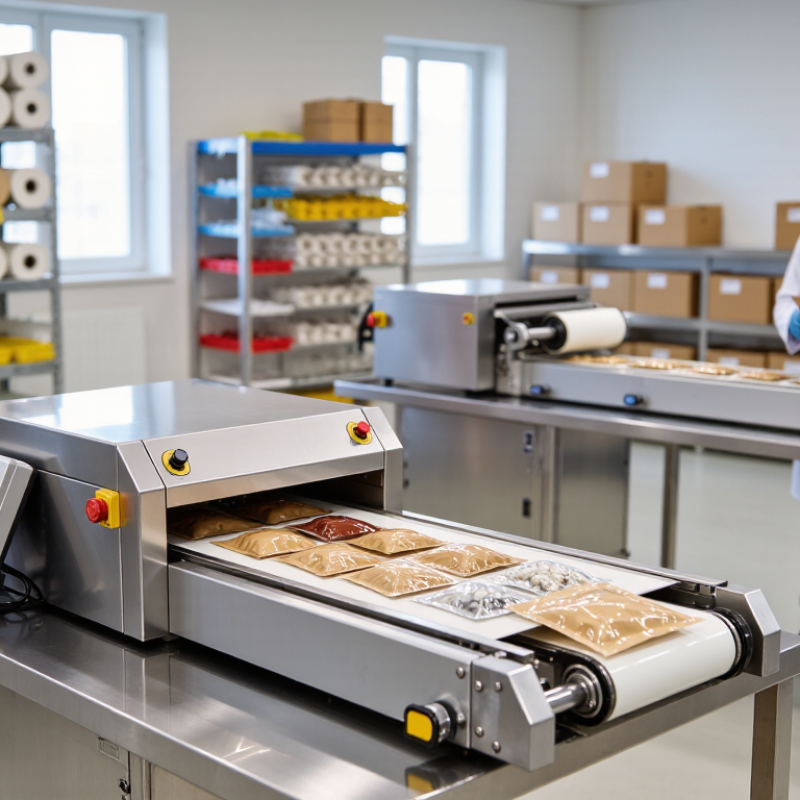
2026 Best Food Sealing Machine for Global Buyers?

What Is a Food Sealing Machine and How Does It Work?

2026 Best Food Sealing Machine for Global Buyers?

What Is a Food Sealing Machine and How Does It Work?

A food sealing machine closes bags or pouches with controlled heat and pressure. It helps protect food from moisture, dust, oxygen, and handling. Common models use impulse heat or constant heat. Impulse sealing heats only when the jaws press together. Constant-heat models maintain hot surfaces for thicker films. The sealing process has three key controls: temperature, pressure, and dwell time. If one setting is wrong, the seal may wrinkle, burn, or open during transport. Vacuum models remove air before sealing, but they still need suitable packaging film and clean sealing edges. A strong-looking seal is not always a reliable seal.

In practical testing, operators should seal sample bags filled with the real product. Check the seal after cooling, squeezing, dropping, and storing. Product powder can weaken the seal. Oil may cause contamination. Choose a machine that matches bag width, film material, daily volume, and local electrical requirements. For global purchasing, ask for clear manuals, spare heating parts, safety instructions, and test records. Food-contact materials should meet the applicable requirements in the target market. Small details matter.

Tips: Keep sealing surfaces dry and clean. Start with moderate settings. Increase heat gradually. Test every new film type. Do not trust appearance alone. I have found that rushed testing creates expensive problems later. Even experienced users can miss a weak corner. Record settings, batch conditions, and inspection results for repeatable operation.

2026 Best Food Sealing Machine for Global Buyers?

Typical heat-sealing temperature ranges for commonly used food-packaging films. Actual settings depend on film structure, thickness, dwell time, and machine pressure.

Which Types of Food Sealing Machines Are Available in 2026?

For global buyers in 2026, food sealing machines fall into several practical categories. Impulse heat sealers suit small batches, dry products, and flexible pouches. Continuous band sealers work faster, especially for flour, snacks, and frozen foods. Vacuum chamber machines remove air before sealing meat, cheese, and prepared meals. External vacuum units cost less, but they often struggle with liquids.

Tray sealers serve ready meals, fresh produce, and portioned proteins. Many support modified-atmosphere packaging, which can help control oxidation and product freshness. Induction sealers are used for bottles, jars, and tamper-evident closures. Ultrasonic systems are also gaining attention where clean seals and reduced heat exposure matter. They remain less common and usually cost more.

Industry data shows why this range matters. PMMI reported that U.S. packaging machinery shipments reached about 10.3 billion dollars in 2023, with food remaining a major demand sector. Grand View Research projects continued growth in global food packaging equipment through 2030, driven by convenience foods and automation. These figures suggest strong investment, but they do not guarantee the right machine for every factory. In production trials, seal width, film thickness, moisture, and cleaning time can change the result. Small failures matter. A perfect seal on dry packaging may fail beside a wet filling line. Buyers should test real products, not sample film alone.

What Features Matter When Comparing Food Sealing Machines?

When global buyers compare food sealing machines in 2026, sealing quality should lead the checklist. A clean seal must resist leaks, wrinkles, and mild handling during transport. Ask for test samples using your actual pouch film, filling level, and product temperature. A machine that seals dry powder may struggle with oily sauces. This small trial often reveals more than a catalogue.

Temperature control matters because different films soften at different points. Look for stable heat, adjustable dwell time, and even pressure across the sealing bar. Digital settings help operators repeat a proven process. However, a screen does not guarantee accuracy. Verify readings with routine checks and keep records for each production shift. Sealing speed also needs practical attention. A fast cycle is useless if rejected packs increase. In my experience, accessible parts and simple cleaning reduce downtime more than impressive output claims. Leave room for mistakes.

For international operations, voltage compatibility, spare-part access, manuals, and operator training deserve equal weight. Safety guards, emergency stops, and food-contact materials should be clearly documented. Check whether the frame suits your workspace and whether staff can reach the controls without awkward movement. Energy use can affect long-term cost, especially during extended shifts. Noise and heat matter too. Buyers sometimes overlook them until workers complain. I would also question overly precise capacity promises; real output changes with pouch size, loading habits, and inspection time. A careful comparison should include maintenance labor, packaging waste, and local technical support, not only the purchase price.

How Do Global Standards Affect Machine Selection?

2026 Best Food Sealing Machine for Global Buyers?

Global standards directly shape food sealing machine selection. The FAO’s The State of Food and Agriculture 2019 reported that 14% of food is lost between harvest and wholesale. Reliable sealing can reduce exposure to moisture, oxygen, and contamination. The UNEP Food Waste Index Report 2024 estimated 1.05 billion tonnes of food waste in 2022. Small sealing failures can therefore create large commercial losses.

A suitable machine should match the destination market, not only the product. Food-contact parts may need traceable stainless steel and documented material compliance. Electrical systems should follow recognized safety requirements, such as IEC 60204-1.

Buyers should also review HACCP controls and ISO 22000-based food-safety systems. European shipments may require conformity documentation, while other markets may request different records.

Test the seal with real packaging film, product residue, and expected transport conditions. Do not trust a perfect factory sample. It can mislead. In practical evaluations, a clean pouch may seal well, while oily edges produce weak channels. Operators also need clear temperature controls, repeatable pressure, and accessible cleaning zones. IP-rated protection helps, but an IP number alone does not prove hygienic design. This is where many purchasing decisions remain imperfect: buyers compare speed first, then discover that validation records, spare parts, or local technical support are missing.

How Can Buyers Match a Sealing Machine to Their Needs?

A sealing machine should match the product, package material, production speed, and working environment. Start with the product itself. Powder, liquid, oily snacks, and frozen food create different sealing risks. A test with real filled packages is more valuable than a catalogue promise. Check seal strength, leakage, wrinkles, and opening force after storage.

Packaging format matters too. Pre-made pouches need accurate temperature and pressure control. Continuous roll film may require better tracking and higher speed. For small batches, a simple impulse sealer can reduce unnecessary investment. High-volume lines may need automatic feeding, gas flushing, and in-line inspection. Do not ignore cleaning access. Food residue around the sealing jaws can quickly become a quality problem.

The FAO’s State of Food and Agriculture report estimates that 14% of food is lost between harvest and retail. The UNEP Food Waste Index 2024 reports 1.05 billion tonnes of food waste in 2022. Reliable sealing cannot solve every loss, but it can reduce leakage and exposure when correctly specified. Ask suppliers for documented test results, energy requirements, spare-part plans, and operator training. Voltage compatibility is easy to miss. So is local technical support.

Buyers should compare total operating cost, not only purchase price. A cheaper machine may consume more film, need frequent adjustments, or produce more rejected packs. I would also leave room for doubt. Laboratory results may not reflect humid warehouses, uneven filling, or tired operators. Run a site trial before approval, and record performance across several production shifts.

2026 Best Food Sealing Machine for Global Buyers? - How Can Buyers Match a Sealing Machine to Their Needs?

Machine Type Typical Package Typical Output How It Seals Best Match Key Buyer Checks
Impulse Heat Sealer Heat-sealable plastic pouches and bags, including suitable polyethylene and laminated films Operator-dependent; commonly suited to low-volume or intermittent work A heated bar seals the material when the operator activates the machine; the bar cools between sealing cycles Small food businesses, sample packing, and production with frequent bag-size changes Check bag width, seal width, film compatibility, sealing time, and whether a cutter or foot pedal is needed
Continuous Band Sealer Preformed heat-sealable bags and pouches Often adjustable up to approximately 12 m/min, depending on the model and material Conveyor belts move bags through heated sealing wheels; some models also print a date or batch code Regular, medium-volume packing where bags can be fed continuously Confirm bag thickness, opening width, conveyor load limit, seal orientation, speed control, and coding requirements
Chamber Vacuum Sealer Vacuum-compatible pouches containing meat, cheese, seafood, or other suitable foods Cycle-based; cycle time depends on chamber size, vacuum level, and product The pouch is placed inside the chamber; air is removed from the chamber and pouch before the pouch is heat-sealed Food processors seeking vacuum packaging, especially for liquids or moist products that are difficult to seal with external vacuum machines Check usable chamber dimensions, pump capacity, seal-bar length, cycle time, and pouch material; vacuum packaging does not replace food-safety controls
External Vacuum Sealer Embossed or channel-textured vacuum pouches compatible with the machine Cycle-based and generally suited to light-duty or small-scale packing The machine draws air through the open end of the pouch, then heat-seals it Home-scale, farm, or small-business use with limited daily volume and mostly solid products Check pouch type, maximum bag width, duty cycle, pump design, and suitability for moist foods; smooth chamber pouches may not work
Tray Sealer Preformed food trays with a compatible lidding film Manual and semi-automatic models are cycle-based; output depends on cavities, operator handling, and cycle time A heated die bonds lidding film to the tray flange; some systems can cut the film and modify the tray atmosphere Prepared meals, fresh foods, and portion-controlled products sold in trays Match tray dimensions and flange, film type, cavity layout, sealing temperature, and whether vacuum or gas flushing is required
Induction Sealer Compatible containers fitted with a foil induction liner, commonly in capped bottles or jars Depends on whether the unit is handheld, conveyor-based, and integrated with the filling line Electromagnetic energy heats a foil liner, bonding it to the container opening Products needing a tamper-evident inner seal on compatible containers Verify container and liner compatibility, cap fit, line speed, seal inspection method, and applicable food-contact requirements

Selection note: Output figures and operating limits vary by machine configuration, package dimensions, material, operator, and production conditions. Confirm performance using the actual food product, packaging, and target line speed before purchasing.

Scroll to Top