
What Is a Bucket Filling Machine and How Does It Work?
A Bucket Filling Machine is designed to fill empty buckets with measured quantities of liquids, powders, granules, or semi-solid products. It combines controlled dispensing with a repeatable container-handling process. In a typical production line, an empty bucket arrives on a conveyor, stops beneath a filling nozzle, and receives a programmed dose. Sensors confirm its position. A valve then opens for a set time or until the target weight is reached.
The machine’s performance depends on several linked parts. A hopper or supply tank stores the product, while pumps, augers, or gravity systems move it toward the filling head. Load cells can check each bucket’s weight, helping operators reduce overfilling and material waste. After filling, the system may transfer the bucket to a lidding or sealing station. Simple in appearance. Detailed in practice.
Selecting the right Bucket Filling Machine requires attention to product viscosity, bucket size, filling accuracy, cleaning requirements, and production speed. Food, chemical, coating, and construction-material facilities may need different contact materials and control systems. Stainless steel surfaces can support hygienic maintenance, but they do not replace proper cleaning procedures. That detail is often underestimated.
Reliable operation also depends on calibration, operator training, and regular inspection. A machine may appear stable while a worn valve slowly changes fill volumes. This guide explains the working sequence, major components, suitable applications, and common limitations. It also considers practical issues that specifications sometimes overlook, including product foaming, dust, dripping, and inconsistent supply pressure. No system is flawless, and real-world performance deserves careful review.
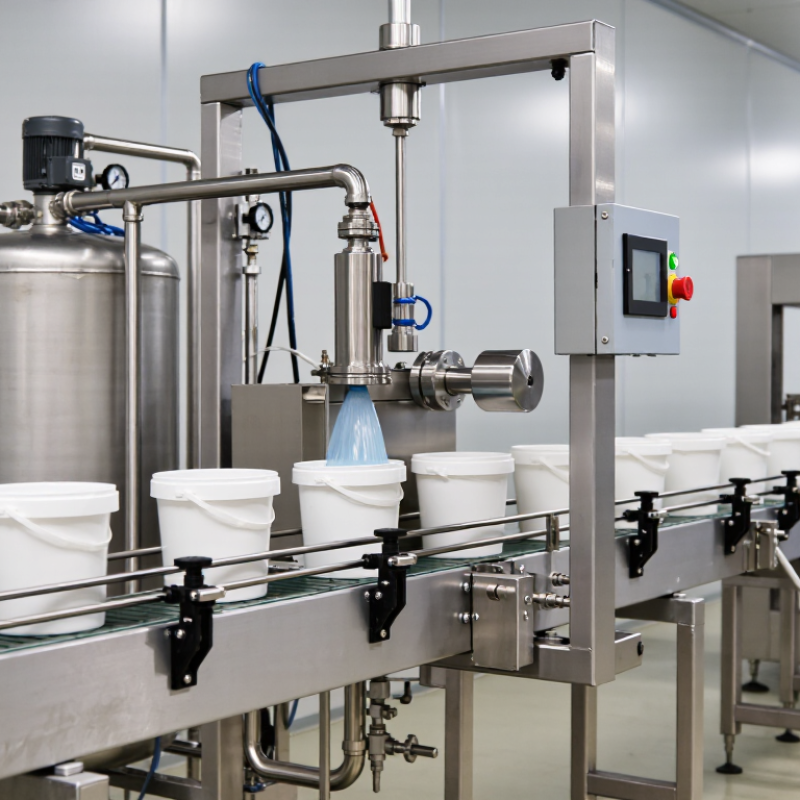
What Is a Bucket Filling Machine?
A bucket filling machine is industrial equipment designed to measure and place products into open buckets. It is commonly used for paint, food ingredients, chemicals, powders, and other controlled materials. The machine usually includes a bucket conveyor, filling hopper, weighing system, and control panel. Some models use volumetric measurement, while others rely on load cells for greater weight accuracy. In practical operations, the correct system depends on product density, texture, and filling speed.
The process is straightforward but carefully controlled. Empty buckets move into position beneath a filling nozzle. Sensors confirm their location before the valve opens. Material then flows from the hopper into each bucket. A weighing system monitors the increasing load and signals the valve to close near the target weight. The machine may use a slower final fill stage to reduce splashing, dust, or overfilling. Operators still inspect bucket rims and product levels because sensors can react differently to vibration or uneven floors.
A reliable machine should be easy to clean and adjust. Product-contact parts often require suitable materials and accessible connections. Safety guards, emergency stops, and clear operating instructions are also important in daily production. Speed is not everything. A fast machine can create more waste if the filling error is poorly controlled. Even accurate equipment needs regular calibration, although this step is sometimes overlooked. That is a weakness worth acknowledging. Small changes in temperature, moisture, or product flow can affect performance.
What Are the Main Components of a Bucket Filling Machine?
A bucket filling machine combines mechanical handling, accurate dosing, and basic process control. Its frame supports every working part and keeps the bucket path stable. Strong guards protect operators from moving components and unexpected splashes.
The bucket hopper stores empty containers before filling. A conveyor or indexing table moves each bucket beneath the filling station. Guide rails keep containers centered, although poorly adjusted rails can create dents or stoppages. Filling nozzles deliver the product into each bucket. Their shape depends on the material’s thickness and foaming behavior. A pump controls product flow from the supply tank. For heavier materials, a positive displacement pump often provides steadier dosing. A wider nozzle is not always better.
Load cells measure bucket weight during filling. They can stop the pump when the target quantity is reached. Some machines use flow meters instead, especially when the product remains consistent. Sensors confirm bucket position, detect missing containers, and prevent a nozzle from opening at the wrong time. The control panel connects these signals with the motor, pump, and pneumatic valves. In practical commissioning work, small calibration errors can become visible across hundreds of buckets. I have seen a clean machine lose accuracy because product temperature changed its viscosity. Regular checks should include nozzle alignment, sensor response, pump seals, and scale calibration. These details seem minor, but they directly affect fill accuracy and daily reliability.
What Is a Bucket Filling Machine and How Does It Work?
A bucket filling machine typically uses a hopper, dosing device, weighing system, controller, and discharge gate to measure and release a precise quantity of product into each bucket.
This chart shows representative throughput ranges for common bucket-filling methods. Actual performance depends on product density, particle size, bucket volume, dosing accuracy, and the selected machine configuration.
How Does a Bucket Filling Machine Work Step by Step?
A bucket filling machine measures and dispenses products into open containers. It can handle liquids, powders, granules, or thick foods. The exact process changes with product density, container size, and filling accuracy.
How Does a Bucket Filling Machine Work Step by Step?
The operator places empty buckets on an infeed conveyor. Sensors detect each bucket and confirm its position. A conveyor stop then holds it beneath the filling nozzle. The control system selects a target weight or volume. A pump, auger, or gravity valve releases the product. Many machines use fast filling first, then slow filling near the target. This reduces splashing and overfilling.
A load cell may check the filled bucket in real time. If the weight is outside tolerance, the machine can pause it for inspection. The lid station then positions and presses a cover onto the bucket. Some systems add sealing, coding, and label application. Finally, the conveyor moves the bucket toward packing or palletizing. The sequence looks simple. Product behavior is not.
The International Federation of Robotics reported 541,302 industrial robot installations worldwide in 2023. That figure reflects growing automation across packaging operations. PMMI industry reports also identify labor shortages and flexible production as major automation drivers. Still, automation does not remove every error. A dusty load cell, uneven floor, or poorly adjusted valve can reduce accuracy.
Tips: Test the product at operating temperature. Check nozzle height before production. Record fill weights regularly. Leave space for manual inspection. The fastest setting is not always the best one.
What Materials and Products Can It Fill?
A bucket filling machine dispenses measured products into open buckets. It commonly handles powders, granules, pellets, flakes, and some liquids. The right system depends on texture, flow, density, and moisture.
Dry powders may include flour, mineral powder, detergent, or powdered ingredients. Granules can include seeds, plastic pellets, feed, and agricultural materials.
Liquid fillers can process paint, sauces, oils, or cleaning solutions when fitted with suitable pumps and nozzles. Sticky products need special attention. They may cling to equipment walls and create inaccurate fills.
A weighing system often delivers better control than volume alone. It checks the bucket’s target weight and adjusts the product flow automatically.
In practical equipment trials, material behavior can change unexpectedly. Fine powder may bridge above the outlet. Lightweight flakes can create dust or settle unevenly. These details affect speed, accuracy, and cleaning time. A machine that works well with pellets may perform poorly with damp powder. That difference is easy to underestimate.
Tips: Test the actual product before purchase. Measure moisture, bulk density, and flowability. Check whether the bucket needs vibration or settling. Review contact materials and cleaning access carefully. Keep a small allowance for product variation. Perfect filling is not always realistic. Consistent filling is the better goal.
What Factors Should Guide Machine Selection?
A bucket filling machine dispenses measured product into empty buckets, then transfers them for sealing or labeling. Its filling head may use gravity, pumps, augers, or load cells. The correct choice depends less on headline speed and more on product behavior. Powder bridges. Thick liquids drip. Granules settle unevenly.
Start with fill accuracy, bucket size, and the required production rate. A machine rated for 30 buckets per minute may slow considerably with frequent size changes. Product temperature, viscosity, moisture, and dust levels also matter. PMMI’s 2024 State of the Industry report identifies labor availability and efficiency as major reasons manufacturers invest in automation. However, automation does not remove poor process design. It can repeat mistakes faster.
Hygiene and maintenance deserve equal attention. Select tool-free contact parts where possible, smooth surfaces, and accessible cleaning zones. Check changeover time using real containers, not a sales estimate. Utilities can quietly raise operating costs. The U.S. Department of Energy notes that compressed-air systems may waste 20–30% of their output through leaks and misuse. Therefore, review air consumption, electrical demand, and spare-part access before approval. Data logging is useful for tracking rejects and fill drift, but sensors still require calibration. The fastest option may be the wrong one. A slower machine with stable accuracy, simpler cleaning, and fewer stoppages may deliver better value. I would also test the most difficult product first. That is where optimistic specifications usually weaken.
| Machine or Selection Factor | How It Works or What It Measures | Typical Operating Range | Suitable Materials or Applications | Main Advantages | Important Limitations | Selection Priority |
|---|---|---|---|---|---|---|
| Net-Weigh Filling | Weighs a measured quantity of product in a hopper, then discharges it into the bucket. | Commonly used for approximately 1–25 kg per bucket; actual range depends on the load cell and product. | Granules, pellets, seeds, dry food ingredients, powders with consistent flow, and industrial solids. | Good filling accuracy; target weight can be adjusted through the control system. | May require vibration control and a stable product flow to maintain accuracy. | High |
| Volumetric Filling | Dispenses a preset volume using a cup, chamber, or timed auger rotation rather than weighing every dose. | Best suited to products with relatively stable bulk density and flow behavior. | Uniform granules, powders, detergents, and some dry building materials. | Simple operation, fast dosing, and generally lower initial complexity. | Weight can vary when bulk density, particle size, or moisture changes. | Medium |
| Auger Filling | A screw auger meters powder or fine material into the bucket by controlling screw speed and rotation time. | Typically used for low- to medium-flow powders and fine particulate products. | Flour, powders, additives, mineral products, spices, and other dry materials. | Suitable for controlled powder dosing and enclosed material handling. | Dust control, product bridging, and screw wear may require additional attention. | High for powders |
| Piston or Pump Filling | Uses a piston, pump, or servo-driven displacement system to transfer a measured amount of liquid or paste. | Selected according to viscosity, required fill volume, and product temperature. | Liquids, sauces, pastes, coatings, adhesives, and other pumpable products. | Provides controlled dosing for liquids and viscous products. | Product-contact components may need frequent cleaning and compatibility checks. | High for liquids |
| Bucket Size and Fill Range | Defines the container dimensions, bucket volume, opening size, and allowable fill weight. | Must match the smallest and largest buckets planned for production. | Plastic, metal, or rigid composite buckets with compatible shapes and openings. | Ensures reliable positioning, filling, and downstream handling. | Large variation in bucket dimensions may require change parts or adjustable tooling. | High |
| Required Throughput | Measures the number of filled buckets needed per minute or per hour, including indexing and changeover time. | Typical automatic systems may handle roughly 5–30 buckets per minute, depending on product and fill size. | Small-batch, medium-volume, and continuous production lines. | Helps prevent under-sizing and supports production planning. | Rated speed may decrease with large containers, difficult products, or frequent size changes. | High |
| Filling Accuracy | Indicates how closely each filled bucket meets the target weight or volume. | Often specified as a percentage, tolerance band, or standard deviation; the achievable result depends on the product and machine design. | Applications with material-cost control, legal metrology requirements, or strict batch specifications. | Reduces giveaway and supports consistent product quality. | Accuracy can be affected by density variation, dust, vibration, and inconsistent feeding. | High |
| Product Characteristics | Considers particle size, bulk density, flowability, moisture, temperature, abrasiveness, and viscosity. | Must be assessed using representative production material rather than product descriptions alone. | Free-flowing solids, cohesive powders, liquids, pastes, fragile products, and abrasive materials. | Improves dosing consistency and reduces blockages or product damage. | A machine suitable for one material may perform poorly with another material of the same nominal weight. | High |
| Automation Level | Ranges from manual bucket placement to automatic bucket feeding, filling, lidding, labeling, and discharge. | Manual, semi-automatic, or fully automatic configurations are available in the general market. | Low-volume operations through integrated high-volume packaging lines. | Determines labor requirements, consistency, and line integration potential. | Higher automation usually increases capital cost, controls complexity, and maintenance requirements. | High |
| Cleaning and Sanitation | Evaluates access to product-contact parts, tool-less removal, washdown design, and hygienic construction. | Requirements depend on the product, industry, allergen controls, and cleaning method. | Food, pharmaceutical, chemical, paint, and other applications requiring controlled cleaning. | Reduces downtime and helps prevent cross-contamination. | Washdown features may require sealed components and more specialized maintenance procedures. | High for hygienic products |
| Dust and Spill Control | Uses enclosed transfer points, extraction connections, covers, and controlled product discharge to limit emissions. | Required level depends on powder fineness, dust hazard, product toxicity, and workplace regulations. | Fine powders, minerals, chemicals, cementitious products, and dusty granules. | Improves worker safety, housekeeping, and equipment reliability. | May require external dust collection and additional engineering controls. | High for powders |
| Container Handling and Stability | Assesses bucket infeed, positioning, clamping, indexing, and discharge stability during filling. | Must accommodate bucket shape, center of gravity, stiffness, and line speed. | Rigid buckets with stable bases and consistent openings. | Reduces tipping, splashing, misalignment, and product loss. | Flexible, damaged, tapered, or irregular containers may require customized handling. | High |
| Controls and Data | Includes recipe storage, operator interface, alarms, batch records, and communication with upstream or downstream equipment. | Functionality should match traceability, reporting, and production-management needs. | Operations requiring repeatable recipes, multiple products, or production records. | Supports quick changeovers, troubleshooting, and process monitoring. | More advanced controls require compatible networking, training, and support. | Medium to High |
| Maintenance and Spare Parts | Considers access to wear parts, inspection points, lubrication needs, diagnostics, and spare-part availability. | Evaluate expected service intervals and the time required for routine maintenance. | All production environments, especially lines operating for extended shifts. | Reduces unplanned downtime and supports predictable operating costs. | Complex mechanisms may need trained technicians and scheduled servicing. | High |
| Utilities and Installation | Reviews electrical power, compressed air, floor space, exhaust requirements, and connection points. | Utility demand varies with actuator type, automation level, and dust-control equipment. | New lines, replacement projects, and facilities with limited infrastructure. | Prevents installation delays and helps estimate total operating cost. | Insufficient air pressure, power capacity, or space can limit machine performance. | Medium to High |
Note: Operating ranges are general planning values. Final machine selection should be confirmed through product trials using the actual bucket, material, target fill quantity, required accuracy, and planned production rate.