How to Choose the Best Robot AMR in 2026?

Choosing the best robot amr in 2026 requires more than comparing speeds, payloads, and promotional claims. Warehouse leaders should examine the complete operating environment. A narrow aisle, uneven floor, cold storage zone, or crowded packing station can change the result dramatically. The right robot must fit the work, not merely look advanced.

Melonee Wise, a respected robotics expert and former Fetch Robotics CEO, once said, “Robots are not going to take your job; the person who knows how to use robots will.” Her observation remains practical for modern logistics teams. A robot amr can reduce repetitive walking, improve material flow, and support safer movement around busy facilities. However, it cannot repair weak processes by itself. Poor mapping, unclear traffic rules, or unreliable fleet software may create new delays.

Real evaluation starts with a measurable task. Track travel distance, daily missions, loading time, battery changes, and human waiting time. Then test the robot during a normal shift, not only in a clean demonstration area. Ask whether workers can understand alerts quickly. Check how the system handles blocked routes, mixed pallets, emergency stops, and network interruptions. Integration also matters. The robot should communicate reliably with warehouse management and execution systems.

There is no perfect choice.

Some buyers may overvalue payload capacity. Others may underestimate onboarding effort, maintenance access, or operator training. Those mistakes are understandable, but expensive. This guide compares the capabilities, limitations, safety features, software compatibility, and long-term costs that should shape a confident robot amr decision in 2026.
How to Choose the Best Robot AMR in 2026?

What Is an Autonomous Mobile Robot (AMR)?

How to Choose the Best Robot AMR in 2026?

What Is an Autonomous Mobile Robot (AMR)?

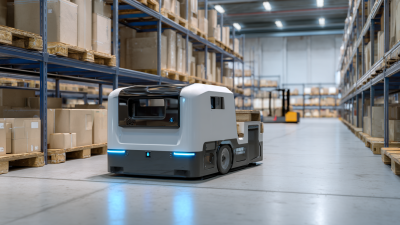
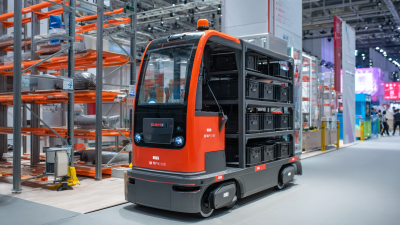
An autonomous mobile robot, or AMR, is a wheeled machine that moves materials through a workspace with limited direct guidance. It uses sensors and onboard software to understand its surroundings, follow a route, and respond to obstacles. For example, an AMR might carry a tote from a packing area to a workstation, then adjust its path when a person crosses its route. Unlike a vehicle that follows a fixed track, an AMR can often navigate changing layouts. “Often” matters: performance depends on floor conditions, traffic, setup, and the quality of the site map.

AMRs are not simply plug-and-play helpers. Teams need to consider payload, turning space, doorways, charging access, and how the robot will interact with workers. A small test in the actual work area can reveal problems that a product sheet cannot. Still, one trial may not reflect busy shifts or seasonal layout changes. That is worth questioning.

Tips: Measure the narrowest aisle and busiest crossing before comparing models. Ask how the robot handles blocked paths, low lighting, and lost connections. Check maintenance needs and staff training, too. A robot that fits the workflow is more useful than one with impressive specifications alone.

How to Define Your Facility’s AMR Requirements

How to Define Your Facility’s AMR Requirements

Choosing the best robot AMR in 2026 starts with observing work, not browsing specifications. Walk the facility during every shift. Measure the real route. Record load weights, pallet sizes, aisle widths, floor gaps, ramps, and delivery points. Note where people, forklifts, doors, and temporary storage interrupt movement. People change everything.

Define the operating target with measurable detail. How many loads must move per hour? What is the peak demand before a shift change? Specify payload, travel distance, charging windows, and acceptable delivery delays. Check whether the AMR can connect with warehouse software, elevators, doors, and safety systems. A technically capable machine may still fail if workers cannot understand its signals or safely share its path.

Our first capacity estimate was wrong because we measured average demand instead of the busiest thirty minutes. That mistake matters. Use real production data, then test the hardest route with representative loads. Inspect turning behavior near racks and stopping performance around blind corners. Ask maintenance staff about cleaning, wheel wear, battery access, and fault recovery. Document every assumption. A pilot should measure completed missions, waiting time, blocked routes, intervention frequency, and near misses. Leave room for doubt. Floor conditions and human habits often differ from the original plan.

Which AMR Capabilities and Specifications Should You Compare?

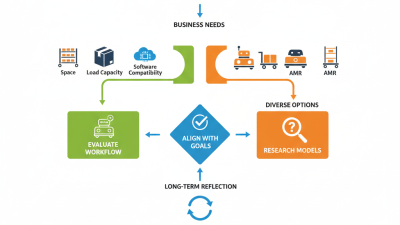
A robot AMR should fit the work, not just the specification sheet. Compare rated payload with the heaviest real load, including bins, fixtures, and uneven weight. Check the load center too. A cart carrying 200 kilograms may behave differently when its weight sits high or off-center. Measure aisle width, turning space, floor joints, and the tightest doorway. Then confirm the robot can pass while carrying its actual load.

Navigation claims need practical testing. Ask how the AMR handles reflective floors, changing lighting, people crossing its path, and temporary obstacles. Look for adjustable speed zones, reliable emergency stops, and clear alerts when a route is blocked. Test these features during a busy shift, not only in an empty demo area. Small details matter. Battery runtime should cover the planned duty cycle, including stops and charging time. Compare charging methods, recovery time, and performance near the end of a shift.

Check how the AMR connects to doors, lifts, charging stations, and warehouse software. Confirm what happens when Wi-Fi drops or a task is interrupted. Fleet capacity matters, but so do setup effort, maintenance access, spare parts, and technician training. Request measurable figures for speed, payload, stopping distance, and uptime, then verify them on your site. A polished demonstration can miss awkward corners. Some requirements may change after deployment; leave room to reassess routes and workflows.

How to Choose the Best Robot AMR in 2026?

Compare the capabilities that matter most to your facility before evaluating specific models.

The 1–5 scores are an illustrative evaluation rubric, not product ratings or industry benchmark data. Adjust the priorities to reflect your routes, payloads, operating environment, integrations, and service requirements. Verify specifications such as rated payload, navigation methods, safety features, battery runtime, and fleet capacity with each supplier.

How to Assess Safety, Navigation, and System Integration

How to Choose the Best Robot AMR in 2026?
How to Assess Safety, Navigation, and System Integration

Safety begins with the actual aisle, not a polished demonstration. Watch how an autonomous mobile robot responds when a worker steps around a pallet, a cart blocks its route, or a doorway narrows the turning space. Check emergency stops, speed limits, warning signals, and recovery procedures against recognized mobile-robot safety guidance, including ANSI/RIA R15.08. Ask for test records from conditions resembling your site. A tidy demo is useful, but it can hide awkward edge cases.

Navigation should remain reliable when floors are reflective, lighting changes, or temporary obstacles appear. Request a measured trial across busy and quiet shifts, recording route completion, interventions, and delivery times. The International Federation of Robotics reported 4,281,585 industrial robots operating worldwide in 2023, a 10% increase over 2022, in its World Robotics 2024 report. That broader growth signals rising automation adoption, not proof that any AMR will fit your workflow. Treat vendor claims as hypotheses to test.

System integration deserves equal scrutiny. Map how the AMR exchanges jobs and status with warehouse software, elevators, doors, and charging stations. Test what happens when Wi-Fi drops or a task is cancelled. Who diagnoses the fault? How long does restart take? These details are easy to overlook. They are also where a promising pilot can become frustrating. Measure the full process, including staff training and manual handoffs, before expanding the fleet.

How to Choose the Best Robot AMR in 2026? — How to Assess Safety, Navigation, and System Integration

Assessment Area What to Evaluate Evidence to Request or Test Practical Acceptance Criteria Common Risk or Trade-Off
Safety framework Whether the AMR and its intended use are assessed against applicable industrial mobile-robot safety requirements, including ISO 3691-4 where relevant. Risk assessment, safety documentation, operating limits, and information about standards applied to the specific model and application. Responsibilities, operating conditions, and residual risks are documented for the actual site—not just for a generic demonstration. A standards reference alone does not prove that the complete site installation or workflow is safe.
Safety-related controls Protective functions such as emergency stops, protective sensing, speed limitation, and safe stopping behavior. Functional-safety documentation, validation records, and witnessed tests under representative loads and operating conditions. Ask how ISO 13849-1 or other applicable requirements are addressed. Required safety functions are validated for the intended configuration, including payload, travel direction, and relevant operating modes. Stopping distance and protective-field performance can change with speed, payload, floor condition, and sensor placement.
People and obstacle detection How the robot detects people and obstacles, responds to blocked paths, and behaves near intersections, doors, and shared work areas. On-site trials with realistic traffic, occlusions, reflective surfaces, and expected pedestrian behavior; review of detection limitations. The robot slows, stops, or reroutes as specified in the risk assessment, and recovers safely when the route becomes clear. Sensor performance may be affected by occlusion, environmental conditions, or objects outside the system’s detection assumptions.
Navigation method Whether the navigation approach—such as natural-feature mapping, LiDAR-based localization, camera-based localization, or a combination—fits the facility. Demonstration in the actual operating area, including changes in lighting, aisle appearance, temporary obstructions, and layout updates. Localization and route execution remain reliable across normal site variations, with a defined process for map changes and recovery. Different sensor approaches have different environmental constraints; no navigation method is immune to all site changes.
Route flexibility Support for dynamic rerouting, one-way rules, restricted zones, traffic priorities, and temporary route closures. Live test of a blocked aisle, a changed destination, and a restricted area using the proposed fleet-management setup. Dispatch logic respects site rules and provides a clear response when no safe or permitted route is available. Flexible routing can increase configuration complexity and should not bypass site traffic or safety rules.
Payload and load handling Rated payload, load dimensions, center of gravity, load stability, and compatibility with carts, racks, or conveyors. Published specifications and practical trials with the actual load, attachment, floor transitions, and pickup or drop-off interfaces. The required load can be transported and transferred within the robot’s documented operating limits. Payload capacity alone does not confirm stability or compatibility with a particular load and handling method.
Fleet coordination How multiple robots share routes, manage intersections, handle congestion, and prioritize urgent or time-sensitive missions. Simulation or pilot results using expected mission patterns, traffic levels, charging needs, and peak operating periods. Traffic rules and priority behavior are configurable, observable, and suitable for the planned fleet size and workflow. Adding robots does not necessarily increase throughput if shared routes, handoff points, or stations are bottlenecks.
System integration Compatibility with warehouse, manufacturing, or enterprise systems, as well as doors, lifts, conveyors, and other equipment. Interface documentation, supported communication methods, data models, error handling, and a tested integration plan. Orders, status updates, confirmations, and exceptions can be exchanged reliably with clearly assigned system ownership. Integration effort often depends on existing system versions, site-specific workflows, and the quality of available interfaces.
Connectivity and cybersecurity Network coverage, authentication, access control, software updates, event logging, and recovery from connectivity loss. Network survey, security documentation, update policy, access-control model, and tests for temporary network outages. The robot operates safely during communication interruptions and follows the site’s security and IT requirements. Loss of wireless connectivity can interrupt dispatch or monitoring; safe local behavior should be defined and tested.
Charging and availability Charging method, charging location, battery operating limits, and how charging is scheduled around the workload. Battery and charging specifications, duty-cycle analysis, and a pilot covering representative shifts and mission patterns. The charging plan supports the required operating schedule without creating unsafe congestion or disrupting material flow. Actual runtime depends on route length, payload, traffic, stops, floor conditions, and charging strategy.
Monitoring and support Visibility into robot status, mission history, faults, software versions, and maintenance needs. Sample dashboards and reports, diagnostic procedures, spare-parts plan, training materials, and support escalation process. Site staff can identify common issues, recover the operation appropriately, and obtain support within agreed service arrangements. Limited diagnostics or unclear service responsibilities can extend downtime and complicate incident investigation.
Pilot and lifecycle value Measurable performance in the intended workflow, including throughput, mission completion, interventions, and operating costs. A pilot with agreed baseline conditions, representative shifts, defined measurement methods, and documented exceptions. Proceed only when measured results meet the site’s pre-agreed operational, safety, integration, and financial requirements. Results from a short or unrepresentative demo may not predict performance during peak demand or routine operation.

How to Compare AMR Vendors, Support, and Total Cost of Ownership

How to Choose the Best Robot AMR in 2026?

Vendor comparison should begin with support, not a glossy robot demonstration. The International Federation of Robotics reported nearly 205,000 professional service robots sold in 2023. Transport and logistics robots represented the leading application, with about 113,000 units sold. This growth increases choice, but also increases evaluation risk. Ask how quickly technicians respond, where spare parts are stored, and who supports software after deployment. A reliable vendor should provide training, safety documentation, remote diagnostics, and clear escalation procedures.

Total cost of ownership extends far beyond the purchase price. Calculate robot units, fleet software, mapping, integration, charging equipment, maintenance, batteries, training, and downtime. Include floor preparation and future layout changes. A useful pilot measures completed missions per shift, average recovery time, traffic delays, and human intervention. Track these figures during busy periods, not only during demonstrations.

Be strict with the assumptions. A 98% availability claim may exclude charging delays or blocked aisles. Gartner’s research on warehouse automation repeatedly highlights integration and operating-model challenges, not just hardware capability. A pilot can still mislead when the test area is too clean. Request customer references with similar aisle widths, order volumes, and labor patterns. Then compare three-year and five-year costs. The cheapest quote may become expensive after support hours, software changes, and lost production are counted. Perfect forecasts are impossible. Transparent assumptions are better.

Scroll to Top