

How to Choose the Right Junction Box Cabinet?
Choosing the right Junction Box Cabinet is not merely a matter of selecting a metal enclosure. It is a practical decision involving safety, accessibility, environmental protection, and long-term maintenance. A cabinet installed beside a dusty production line faces different demands from one placed in a clean indoor control room. Moisture, heat, vibration, chemicals, cable quantity, and available wall space can all influence the final choice. Small details matter.
Experienced engineers usually begin by studying the installation environment and the equipment inside. They check the required enclosure rating, construction material, door arrangement, mounting method, and cable entry positions. Stainless steel may suit corrosive areas, while coated steel can provide economical protection in many industrial applications. Clear internal dimensions are also important. A crowded cabinet can complicate inspection, increase wiring stress, and create unnecessary heat. Leave room for future changes.
Reliable selection should follow recognized engineering practices and the manufacturer’s technical documentation. However, specifications alone do not guarantee a successful installation. Field measurements, cable bending space, drainage conditions, and technician access deserve equal attention. This is where mistakes often happen. A cabinet may look suitable on paper but become awkward beside a machine or difficult to open safely. Reviewing drawings with installers can reveal these problems early. It is not a perfect process.
This guide explains how to compare Junction Box Cabinet options with practical judgment. It covers materials, protection ratings, sizing, cable management, installation conditions, and maintenance needs. The goal is simple: choose a cabinet that protects connections today and remains serviceable tomorrow. Reliability begins with careful questions, not attractive appearance.
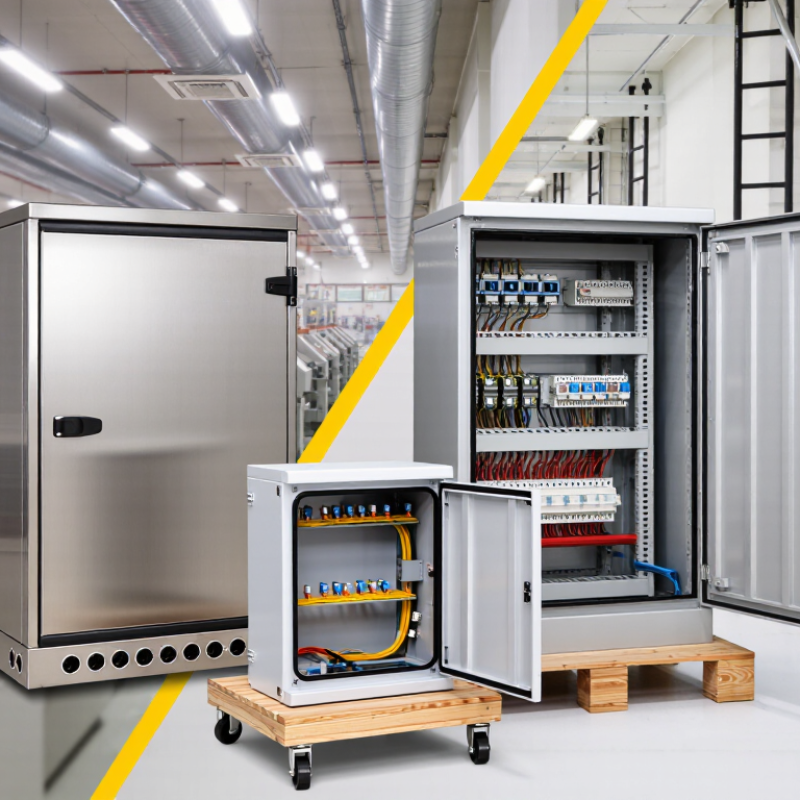
Define the Purpose and Operating Conditions of the Junction Box Cabinet
How to Choose the Right Junction Box Cabinet?
Define the Purpose and Operating Conditions of the Junction Box Cabinet
Start by identifying what the cabinet must protect and control. A junction box cabinet may house terminal blocks, relays, fuses, or communication devices. Its internal layout should support safe wiring, quick inspection, and future maintenance. Count incoming and outgoing cables carefully. Leave spare space for expansion, because crowded terminals create heat and troubleshooting errors.
Operating conditions determine the enclosure design. Check indoor or outdoor installation, ambient temperature, humidity, dust, water, vibration, and corrosive chemicals. Select suitable materials, sealing methods, and ingress protection based on these conditions. In coastal or chemical areas, ordinary metal may deteriorate sooner than expected. Cable glands must match the cable diameter and preserve the enclosure seal. Earthing arrangements also require verification by a qualified professional.
Tips: Record the actual site conditions. Do not rely only on drawings. Test door clearance, cable bending space, and access for tools before approval. I have seen cabinets fit the equipment but fail during installation because the cable route was overlooked. That mistake is avoidable. Review heat buildup, unused entries, and labeling visibility during the design check. Small details matter.
How to Choose the Right Junction Box Cabinet? - Define the Purpose and Operating Conditions of the Junction Box Cabinet
| Selection Dimension | Operating Condition or Requirement | Suitable Cabinet Specification | Practical Selection Guidance |
|---|---|---|---|
| Primary purpose | Cable joining, terminal distribution, signal isolation, or equipment protection | Choose a junction box designed specifically for the intended function, wiring method, and installed components | Define the purpose before selecting enclosure size, terminals, cable entries, and accessories |
| Indoor, outdoor, or sheltered location | Exposure to rain, snow, sunlight, condensation, dust, or washdown | Indoor cabinet for controlled areas; weather-resistant cabinet for outdoor or exposed installations | Use the enclosure protection rating required by the installation standard and actual site conditions |
| Ingress protection | Solid particles, dust, water jets, temporary immersion, or frequent cleaning | Select an enclosure with an appropriate IP code or NEMA enclosure type based on the governing specification | IP ratings and NEMA types use different test systems; do not treat them as exact one-to-one equivalents |
| Dusty environment | Fine dust, powder, fibers, or airborne particles may enter the cabinet | Sealed enclosure with suitable gasket, secure cover, and correctly rated cable glands | The enclosure rating can be reduced by poorly fitted cable glands, unused openings, or damaged seals |
| Water exposure | Rain, hose-directed water, water spray, or temporary flooding | Weatherproof enclosure with a continuous gasket, suitable cover fasteners, and downward-facing or protected entries | Confirm the required protection level after all cable glands, conduit fittings, and drain devices are installed |
| Ambient temperature | Normal operating temperature, low-temperature startup, or high-temperature surroundings | Enclosure materials, gaskets, terminals, and cable glands rated for the complete temperature range | Account for internal heat from terminals, fuses, relays, and other components in addition to ambient temperature |
| Corrosive atmosphere | Salt spray, coastal air, chemicals, fertilizer, wastewater, or industrial fumes | Corrosion-resistant material or protective coating, compatible hardware, and chemical-resistant seals | Check compatibility with the specific chemicals, concentration, temperature, and cleaning agents at the site |
| Enclosure material | Need for impact resistance, low weight, electrical insulation, or corrosion resistance | Powder-coated metal, stainless steel, polycarbonate, or glass-reinforced polyester as appropriate | Metal may provide strength and shielding; non-metallic materials may reduce corrosion and electrical conductivity |
| Electrical voltage and current | Power circuits, control circuits, instrumentation, or mixed-voltage wiring | Terminals, insulation, spacings, and components rated for the circuit voltage and current | Separate power and signal wiring when required, and verify temperature rise and short-circuit requirements |
| Hazardous location | Potentially explosive gas, vapor, dust, or combustible fiber environment | Certified equipment suitable for the area classification, protection method, gas or dust group, and temperature class | Ordinary weatherproof construction is not sufficient; use the certification and installation method required by local regulations |
| Available internal space | Number and size of terminals, cable bending radius, splices, and future additions | Cabinet dimensions that provide clearances, wiring space, and room for maintenance | Do not fill the enclosure to its physical limit; reserve space for cable routing, identification, and expansion |
| Cable entry arrangement | Top, bottom, side, conduit, armored cable, or multiple cable diameters | Correct entry plates, cable glands, conduit hubs, strain relief, and sealing accessories | Confirm cable outer diameters and bending radii before drilling or ordering entry components |
| Mechanical impact and vibration | Mobile machinery, production lines, transport equipment, or areas with frequent impacts | Impact-rated enclosure with secure mounting, robust hinges or fasteners, and vibration-resistant terminals | Use flexible cable support and strain relief so vibration is not transferred directly to terminals |
| Maintenance access | Frequent inspection, testing, fuse replacement, or fault tracing | Accessible cover, clear terminal labeling, adequate working space, and removable mounting plate where needed | Position the cabinet where technicians can open and service it without unsafe access or cable strain |
| Grounding and bonding | Metal enclosure, protective earth, shielded cables, or equipotential bonding requirements | Dedicated grounding points, bonding hardware, and compatible cable shields or gland components | Follow the applicable electrical code and verify continuity after installation and maintenance |
| Compliance and documentation | Project specifications, inspection requirements, or regulated industrial installation | Documented enclosure rating, material data, temperature range, certifications, and installation instructions | Verify requirements against the applicable IEC, NEMA, NEC, or local authority standards before purchase |