Top 10 Logistics Robotics Companies for Global Buyers
Logistics robotics is moving from pilot projects into everyday warehouse operations. Mobile robots now navigate aisles, carry totes, and support safer picking. The International Federation of Robotics reported 541,302 industrial robots installed worldwide in 2023. That figure covers all industries, not logistics alone. Still, it shows the scale of automation investment. DHL’s Logistics Trend Radar also identifies robotics and autonomous operations as important forces shaping supply chains.
Global buyers need more than impressive demonstrations. They need reliable uptime, practical integration, trained technicians, and transparent operating costs. This Top 10 list examines leading logistics robotics companies across autonomous mobile robots, automated storage, robotic picking, sorting, and warehouse software. It considers deployment experience, global service coverage, system compatibility, safety practices, and measurable customer results. MHI’s 2024 Annual Industry Report highlights the continuing pressure to improve efficiency, resilience, and workforce capabilities. Robotics can address these pressures, but it cannot repair poor processes by itself.
Marc Segura, President of ABB Robotics, has said, “Robots are not here to replace people; they are here to augment people.” That principle matters on a busy warehouse floor. A robot should reduce walking distance, repetitive lifting, or sorting delays. It should not create a confusing new bottleneck. No ranking fits every operation. A small distributor may need flexible AMRs, while a high-volume retailer may require fixed automation and advanced controls. Some claims remain difficult to compare because vendors report success differently. Buyers should verify references, integration limits, maintenance response times, and total cost assumptions before signing. The strongest providers combine proven hardware with thoughtful implementation. That distinction often appears after launch, not during the sales presentation.
Define the Logistics Robotics Market: 113,000 Units Sold in 2023 (IFR)
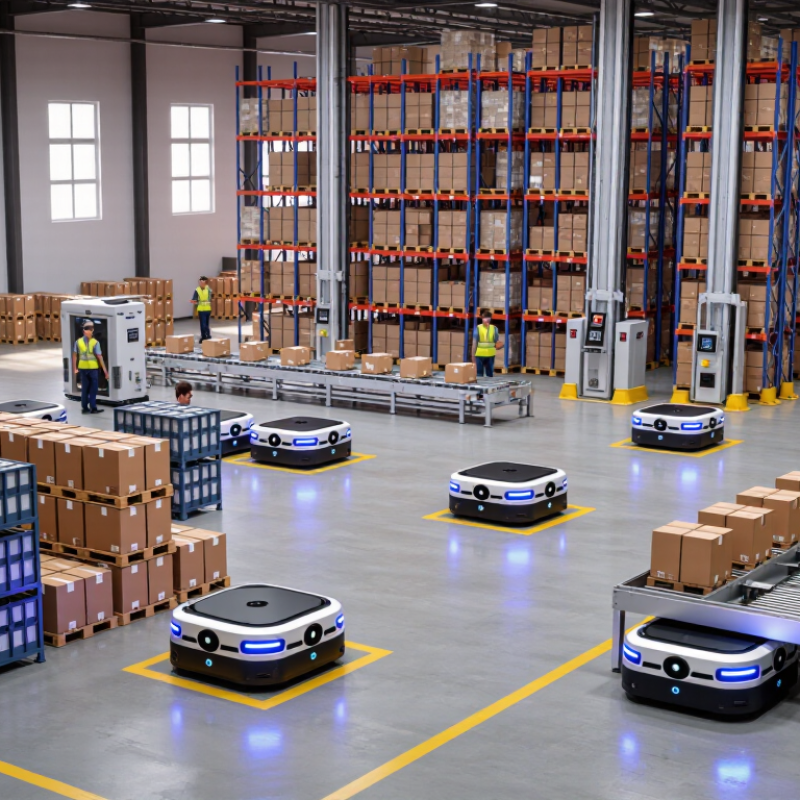
The logistics robotics market reached about 113,000 units sold in 2023, according to the International Federation of Robotics (IFR). This figure shows strong demand for warehouse transport, sorting, picking, and mobile handling systems. It also signals a practical shift from isolated pilots to wider operational use.
For global buyers, the top 10 logistics robotics companies should be assessed beyond sales volume. Key factors include navigation accuracy, payload range, battery endurance, software integration, safety controls, and local maintenance support. A robot moving cartons across a 50-meter warehouse may save labor time, but poor aisle mapping can create costly delays. Integration matters more than impressive demonstrations.
Real-world evaluation requires site data. Buyers should review order density, floor conditions, ceiling height, network stability, and peak-season pressure. A system that performs well in a clean test area may struggle beside crowded racks. This is where market claims need caution. The 113,000-unit figure describes industry sales, not guaranteed productivity for every facility. Some deployments still need manual intervention, especially with irregular packages or changing workflows. Procurement teams should request documented performance results, service response times, training plans, and total ownership costs before selecting a supplier. Small details matter.
Set Evaluation Criteria: Payload, Navigation, Uptime, Safety, and Global Support
Top 10 Logistics Robotics Companies for Global Buyers
Set Evaluation Criteria: Payload, Navigation, Uptime, Safety, and Global Support
A serious evaluation begins with payload, not marketing language. Measure the robot with real cartons, uneven loads, and the heaviest routine shipment. Check acceleration, turning stability, and whether the rated capacity changes on ramps. A machine that carries 500 kilograms on paper may struggle beside a crowded loading dock. Test the actual workflow.
Navigation should be observed during busy shifts. Record performance near forklifts, temporary pallets, reflective floors, and changing aisle layouts. Ask how quickly the system recovers after a blocked route. Uptime needs evidence from customer sites, not only laboratory demonstrations. Request maintenance records, battery cycle data, average repair time, and spare-parts availability. Small delays multiply across a twenty-four-hour operation.
Safety deserves direct inspection. Review emergency stops, obstacle detection, speed limits, pedestrian alerts, and software update controls. Confirm that installation supports applicable local requirements and documented risk assessments. Global support is equally practical: regional technicians, multilingual training, remote diagnostics, and clear escalation procedures matter. I have seen polished trials fail because nobody could service a damaged sensor on a weekend. That weakness is easy to miss. A scoring sheet helps, but it can create false confidence. Leave room for operator feedback, seasonal conditions, and failures that appear only after months of use.
Compare the Top 10 Companies by Robot Type, Deployment Scale, and RaaS Models
Global buyers should compare logistics robotics companies by robot type, deployment scale, and service model. Autonomous mobile robots move totes across warehouses, while robotic arms handle picking, packing, or palletizing. Some systems support cold storage, narrow aisles, and uneven floors. Others need carefully prepared surfaces and stable Wi-Fi. That difference affects installation time, labor planning, and daily output.
Deployment scale reveals practical experience. A small pilot may involve ten robots and one warehouse zone. A regional rollout can require fleet software, spare parts, training, and local technicians. Ask for measurable results, such as order accuracy, travel-time reduction, charging cycles, and recovery time after faults. Customer references matter. However, published case studies may show ideal conditions, not ordinary peak-season pressure. This is where buyers must remain cautious.
Tips: Compare RaaS contracts with direct-purchase options. RaaS can reduce upfront spending and include maintenance, software updates, and replacement units. Yet monthly fees may rise with usage, storage zones, or fleet expansion. Check contract length, uptime commitments, data ownership, integration fees, and exit terms. Request a site simulation before signing. Measure results during a busy shift, not only during a polished demonstration. A failed pilot is still useful if it exposes weak processes, unclear responsibilities, or unrealistic labor assumptions.
Assess Global Readiness Through Certifications, Integration, and Service Coverage
Top 10 Logistics Robotics Companies for Global Buyers
For global buyers, ranking the top 10 logistics robotics companies requires more than comparing speed or payload. Certifications offer a safer starting point, but their scope matters. Check whether each certificate covers the exact robot model, software, battery system, and destination market. Relevant evidence may include ISO 9001 quality systems, ISO 3691-4 safety compliance, and IEC 60204-1 electrical safety. Ask for current certificates and independent test reports. Logos alone prove little.
Integration shows whether a solution can work beyond a demonstration floor. Request documented APIs for WMS, WES, ERP, and warehouse scanners. A capable supplier should support digital mapping, traffic control, user permissions, and data exports. Test a realistic workflow, such as moving a 500-kilogram pallet across a busy aisle during peak hours. Integration often takes longer than expected. That deserves honest planning.
Tips: Check service coverage before signing. Confirm local technicians, spare-parts locations, training languages, remote diagnostics, and emergency response times. Ask for references from facilities with similar temperatures, shifts, and floor conditions. Review software update policies and cybersecurity controls. A low purchase price can become expensive without support. Still, no supplier is perfect; even strong documentation may not predict every site issue. Pilot testing, acceptance criteria, and a clear escalation process reduce that uncertainty.
Rank Buyer Fit Using Total Cost, Scalability, and 2023 Industry Demand Growth
Top 10 Logistics Robotics Companies for Global Buyers
Rank Buyer Fit Using Total Cost, Scalability, and 2023 Industry Demand Growth
Global buyers should rank logistics robotics companies by buyer fit, not headline performance.
The real cost includes equipment, integration, software licenses, staff training, maintenance, and downtime. A low purchase price can become expensive after one difficult warehouse retrofit. Ask for three-year operating costs and verified customer references.
Demand grew strongly in 2023, especially for autonomous mobile robots, robotic picking, parcel sorting, and pallet movement.
Buyers should favor providers with proven deployments in similar warehouse sizes. Scalability matters too. Can one fleet expand from 30 units to 300? Can the system connect with existing warehouse software without rebuilding every workflow?
The strongest candidates usually offer modular hardware, transparent service fees, remote diagnostics, and local technical support. Safety documentation and training records also deserve close review.
Numbers can mislead. A fast robot may create congestion near loading docks.
A flexible platform may need costly integration work. I would score each provider across total cost, expansion readiness, and 2023 demand alignment, using weighted evidence rather than marketing claims.
Some rankings will remain imperfect. Site conditions vary. Labor costs change by region. Buyers should test a live route, inspect failure handling, and calculate payback using their own order data.
A small pilot can reveal more than a polished demonstration.