

China Top Robotics Lab Manufacturers for Global Buyers
China has become a major sourcing destination for robotics lab equipment, automation platforms, and research-grade components. Global buyers can find robotic arms, mobile platforms, machine-vision systems, grippers, sensors, and teaching tools from specialized manufacturers. The real challenge is not finding suppliers. It is separating capable partners from attractive catalogs.
A reliable robotics lab manufacturer should demonstrate engineering depth, documented quality controls, and consistent after-sales support. Buyers should examine calibration records, software compatibility, safety documentation, factory testing, and replacement-part availability. Certifications such as ISO 9001 and relevant robot safety standards can support evaluation, but they do not replace technical verification. A live demonstration matters. So does a clear response to failure.
Rodney Brooks, roboticist and former director of MIT’s Computer Science and Artificial Intelligence Laboratory, once said, “The robots are not going to take over the world. They are going to become part of the world.” His observation reflects the practical role of modern laboratory robotics: useful systems must work beside researchers, not merely impress them.
This guide examines China’s leading robotics lab manufacturers for global buyers. It considers product capability, customization, integration experience, export readiness, and service reliability. Some suppliers may appear strong online yet provide limited documentation. That gap deserves attention. Buyers should also question whether a lower initial price hides training, software, or maintenance costs.
The strongest purchasing decision is rarely the cheapest one. It is the one supported by evidence, transparent communication, and measurable performance. Labs need dependable tools, not promising brochures.
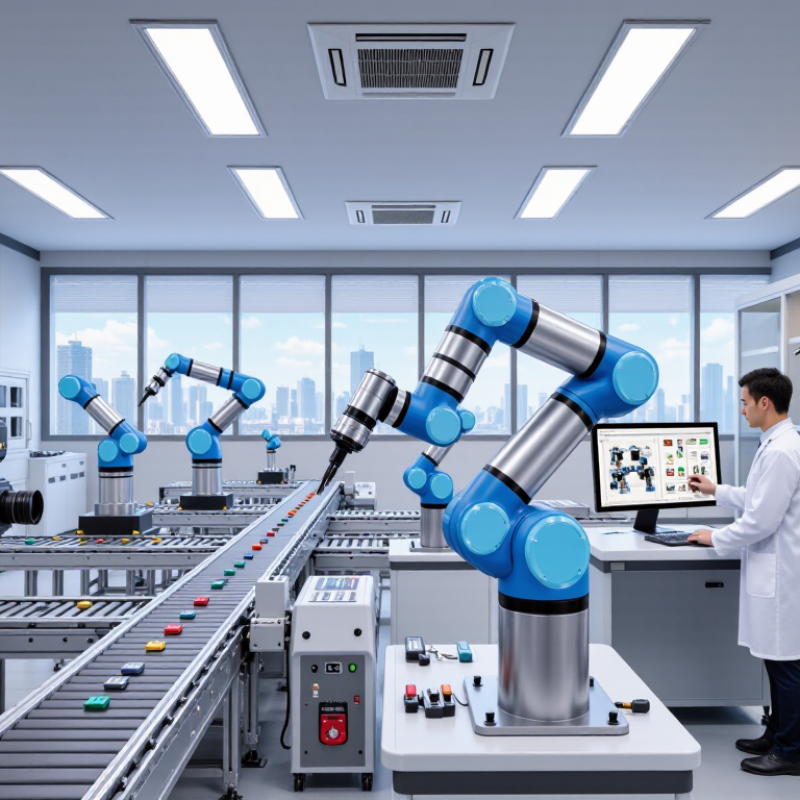
China’s Robotics Lab Manufacturing Landscape for Global Buyers
China’s robotics laboratory manufacturing landscape has expanded from component production into complete research workstations, robotic arms, machine vision, and custom automation. According to the International Federation of Robotics’ World Robotics 2024 report, China installed 276,288 industrial robots in 2023. This represented 51% of global installations. Its operational robot stock reached about 1.755 million units.
For global buyers, the strongest suppliers often combine mechanical design, control software, precision machining, and laboratory integration. Typical applications include sample handling, liquid transfer, inspection, and repeatable testing. Buyers should check positioning accuracy, cycle-time records, environmental limits, and software compatibility. A factory visit matters. Look closely at cable routing, enclosure quality, calibration records, and spare-part storage. Small details reveal manufacturing discipline.
The China Academy of Information and Communications Technology has reported continued growth in intelligent manufacturing investment and industrial digitalization. Yet market data does not remove procurement risks. A polished demonstration can hide weak documentation or inconsistent after-sales support. Request traceability records, factory acceptance test procedures, and clear warranty terms. Confirm compliance with relevant electrical, machinery, and laboratory safety requirements in the destination market. ISO 9001 certification can support quality control, but it cannot replace independent testing. That distinction is easy to miss.
| Manufacturing Cluster | Common Robotics Laboratory Products | Typical Technical Range | Core Engineering Strengths | Laboratory Integration Capability | Common Compliance References | Export and Customization Profile | Typical Buyer Applications |
|---|---|---|---|---|---|---|---|
| Yangtze River Delta (Shanghai, Jiangsu, Zhejiang) |
Industrial robot test rigs Collaborative robot workstations Machine-vision cells Servo motion platforms | Payload classes commonly range from 3 to Fan? | Strong precision machining, motion control, electrical integration, and system engineering. Suitable for repeatable research and validation platforms. | Modular aluminum or steel frames, safety fencing, PLC panels, industrial communication interfaces, machine vision, force-torque sensing, and data-acquisition systems. | ISO 10218, ISO/TS 15066 where applicable, IEC 60204-1, ISO 13849-1, electrical safety documentation, and export-market risk assessments. | High suitability for engineered-to-order projects, multilingual documentation, factory acceptance testing, and integration with overseas laboratory standards. | Automotive research, electronics assembly, university laboratories, precision manufacturing, and robot performance testing. |
| Pearl River Delta (Guangdong) |
Assembly automation cells SCARA robot stations Delta robot platforms Vision inspection benches | Typical payload classes range from 1 to 20 kg; high-speed pick-and-place systems commonly prioritize cycle time and repeatability. | Strong electronics manufacturing, compact automation design, rapid prototyping, fixture production, and high-volume electrical assembly. | Conveyor systems, barcode and vision inspection, pneumatic tooling, electric grippers, feeder systems, HMI panels, and production-data interfaces. | IEC 60204-1, ISO 13849-1, ISO 12100 risk assessment, electromagnetic compatibility requirements, and destination-market marking requirements. | Competitive for compact systems, short development cycles, private-label engineering, and moderate-volume repeat orders. | Consumer electronics, small-appliance assembly, battery components, packaging, laboratory sample handling, and light industrial research. |
| Beijing–Tianjin–Hebei | Robotics research platforms Mobile robot testbeds Robot control laboratories Simulation and digital-twin benches | Payload and speed vary widely by research platform; systems are commonly configured around sensing, navigation, control, and algorithm development. | Strong links to research institutions, control engineering, artificial intelligence, autonomous navigation, and advanced laboratory instrumentation. | ROS-compatible interfaces, LiDAR and camera integration, motion-capture compatibility, real-time control, data logging, simulation support, and modular sensor mounts. | ISO 12100, ISO 10218 for applicable industrial robot systems, electrical safety standards, radio requirements for wireless equipment, and laboratory-specific safety procedures. | Well suited to research contracts, academic collaboration, algorithm testing, and customized platforms requiring extensive software access. | Universities, public research laboratories, autonomous vehicles, defense-adjacent research, logistics robotics, and human-robot interaction studies. |
| Central China (Hubei, Hunan, Henan) |
Heavy-payload robot cells Welding training systems Material-handling laboratories Structural test fixtures | Common laboratory configurations cover approximately 20 to 300 kg payload classes, depending on the robot and end-effector design. | Heavy equipment fabrication, welding automation, structural frames, mechanical durability, and integration of large work envelopes. | Positioners, welding power interfaces, rotary fixtures, safety enclosures, force monitoring, load testing, and large-format operator training systems. | ISO 10218, ISO 12100, IEC 60204-1, ISO 13849-1, welding equipment safety requirements, and applicable machinery regulations. | Appropriate for robust, large-scale installations; international projects may require additional site surveys, shipping engineering, and commissioning support. | Welding research, construction machinery, metal fabrication, foundry operations, logistics, and industrial safety training. |
| Northeast China (Liaoning, Jilin, Heilongjiang) |
Automotive robot laboratories Welding and painting cells Robot endurance rigs Industrial maintenance trainers | Medium- and heavy-duty systems commonly support payloads from approximately 20 to 250 kg, with emphasis on durability and duty cycles. | Experience in automotive production, metalworking, welding, industrial machinery, and process-oriented automation. | Multi-axis robot cells, programmable fixtures, welding process monitoring, safety interlocks, ventilation interfaces, and maintenance-training modules. | ISO 10218, ISO 12100, IEC 60204-1, ISO 13849-1, welding-fume control requirements, and destination-country machinery safety rules. | Suitable for process laboratories and vocational training systems; buyers should confirm climate-control and corrosion-protection requirements for overseas sites. | Automotive engineering, rail equipment, welding education, heavy machinery, metal processing, and industrial maintenance training. |
| Western China (Sichuan, Chongqing, Shaanxi) |
Mobile manipulation platforms Aerospace research fixtures Inspection robotics Special-environment test systems | Configurations range from compact mobile platforms to large fixed cells; performance depends on navigation, inspection, and environmental requirements. | Aerospace and defense-related engineering supply chains, mechanical testing, machine vision, mobile robotics, and specialized environment integration. | Autonomous navigation, inspection cameras, inertial sensors, custom tooling, environmental chambers, remote operation, and data-acquisition integration. | ISO 12100, IEC 60204-1, ISO 13849-1, applicable industrial robot standards, electromagnetic compatibility requirements, and project-specific laboratory protocols. | Strong potential for technically specialized projects; international buyers should define cybersecurity, software access, and after-sales support requirements in advance. | Aerospace testing, infrastructure inspection, energy facilities, warehouse research, hazardous-area studies, and advanced manufacturing. |
| Fujian and Coastal Southeast China | Packaging robot cells Food and pharmaceutical lab automation Compact handling systems Cleanable stainless-steel workstations | Common systems use payloads from approximately 1 to 50 kg, with designs emphasizing hygiene, compact footprints, and quick changeover. | Packaging machinery, food-processing equipment, stainless-steel fabrication, material handling, and practical factory automation. | Washdown-compatible frames, conveyor integration, checkweighing, vision inspection, robotic picking, recipe management, and batch-data recording. | ISO 12100, IEC 60204-1, ISO 13849-1, hygienic-design practices, food-contact material requirements where applicable, and destination-market regulations. | Competitive for standardized workstations and modular export packages; buyers should verify cleanroom classification and sanitation documentation when required. | Food processing, pharmaceutical handling, packaging research, laboratory logistics, cosmetics, and consumer-goods production. |
Related Posts
-

The Future of Robotics Automation Transforming Industries with Data Driven Innovations
-
Top 10 Robotics Lab Innovations Shaping the Future of Technology
-

Exploring the Future: How Robotics and Automation Transform Everyday Life
-

What is Robotics Learning and How It Transforms Education for Future Innovators
-
What is a Robotics Lab and Its Importance in Technology?
-
Maximizing Efficiency with Warehouse Robotics in the Era of Supply Chain Disruption